

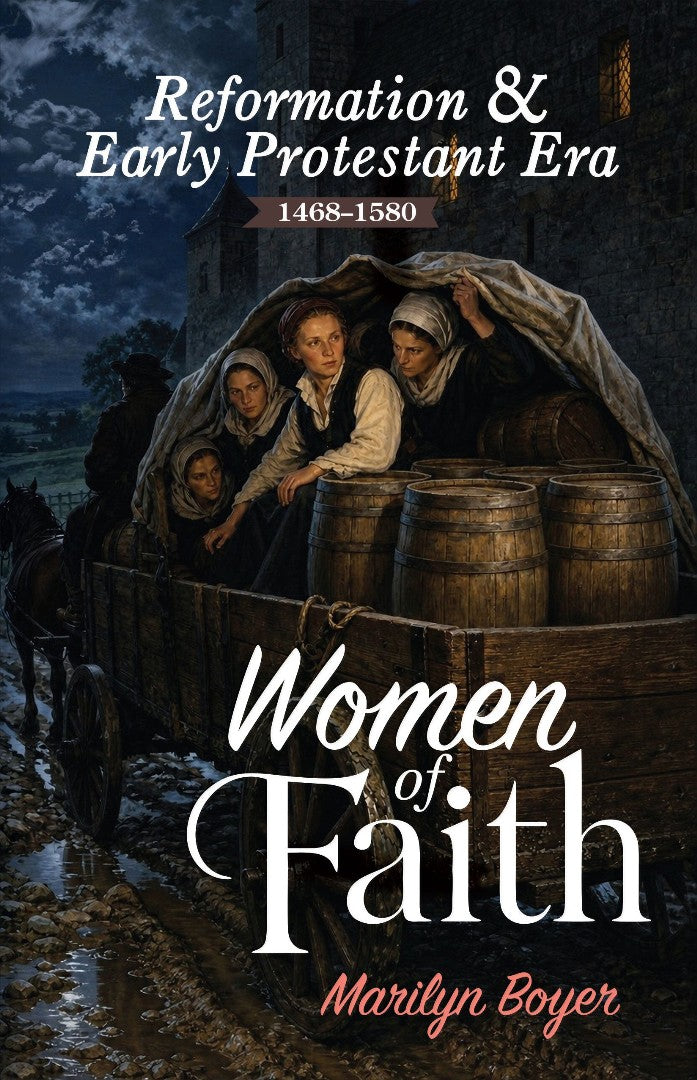
What was the Reformation, viewed through the eyes of the women who lived it? Women of Faith uncovers the hidden hands behind church history: women who wrote, sheltered, taught, and stood firm for their convictions across four centuries of faith under pressure.
This first volume introduces ten women of the 16th-century Reformation, noblewomen, mothers, and reformers' wives who used their homes, their pens, and their social standing to protect persecuted believers and spread the truth of Scripture, often at great personal cost.
When Martin Luther posted his 95 Theses in 1517, he set off a religious upheaval that would reshape Europe. The women in this book were not bystanders to that upheaval. As wives of reformers, ladies of the nobility, and mothers managing busy households, they held real influence: they sheltered exiled pastors, financed the printing of Reformed literature, educated the next generation in their own homes, and in some cases gave their lives rather than recant their faith.
Readers will meet:
- Katharina von Bora Luther, the runaway nun who married Martin Luther and managed their household and his ministry through years of plague, controversy, and loss.
- Anna Reinhard Zwingli, a widow who raised her children alone before marrying Ulrich Zwingli, becoming the first woman to marry a Reformer, and devoting her life to caring for the poor and the sick.
- Argula von Grumbach, a Bavarian noblewoman whose fearless pamphlets defending Luther circulated by the tens of thousands.
- Marguerite de Navarre, a French princess who used her influence with her brother, King Francis I, to win the release of persecuted reformers and protect the spread of Reformed faith in France.
- Katharina Schutz Zell, one of the first Protestant women to marry a reformer, who became known as a mother to refugees and a leading female voice of the Reformation.
- Anna Adlischweiler Bullinger, a former nun whose household in Zürich became a haven for hundreds of Protestant refugees each year.
- Renée of Ferrara, an Italian duchess who turned her own villa and castle into a refuge for persecuted Reformers, even in defiance of her husband.
- Julia Gonzaga, an Italian countess whose political influence and estates shielded believers of the Reformed faith, earning her the title Princess of the Italian Reformation.
- Katherine Willoughby, one of England's wealthiest heiresses, who used her fortune and status to openly support the Reformed cause.
- Lady Jane Grey, England's nine-day queen, who held to her Protestant convictions to the very end, even as she faced execution in the Tower of London.